The Royal Jammers: Teen Rock Stars on the Bar Mitzvah Circuit
- Jun 18
- 7 min read
Updated: Jun 20
By Rick Fishman / Oakland, Calif.

Before Detroit gave the world Motown nostalgia, before Los Angeles gave us the Knack, and before Blue Note Records had a president named Don Was, there was the Bar Mitzvah network in Oak Park, Mich, and a very serious band made up of 12-year-old boys who believed, with total conviction, that they were on the edge of greatness.
We were called The Royal Jammers.
I know this because I named the band. At that age, naming a band was almost as important as actually knowing how to play. Maybe more important. You could fake a guitar chord, but you could not fake a name. The Royal Jammers sounded regal, musical, and just vague enough to suggest we knew something that the adults didn't. We did not, of course. We were kids from suburban Detroit, operating somewhere between Hebrew school, grade school, puberty, and the powerful gravitational pull of girls at dance parties.
The original band included Link Wachler on drums; his brother Andrew Wachler on guitar; me, Ricky Fishman, also on guitar; and a creative kid named Doug Fieger. Doug’s mother was my fifth-grade teacher, and she had decided that her son should meet me. I think she saw me as some kind of confident male figure, which is a very generous description of a boy with a guitar, a Bar Mitzvah coming up, and no visible life plan. Still, she thought Doug and I might connect.
Doug wanted to play guitar, and I gave him his first lessons. That is my claim to rock and roll immortality, or at least my right to a free drink when the subject comes up.

We played the songs every young band played in those days, “Louie Louie,” “Money,” “Twist and Shout,” and anything else with three chords and enough attitude to make girls look in our direction. The Kingsmen were all-important. But then, on February 9, 1964, everything changed. The Beatles appeared on The Ed Sullivan Show, and 73 million people watched. For kids like us, it was not television. It was a calling. America did not just see a band that night. It saw haircuts, boots, screaming girls, and a new career path for boys who had previously been told to become doctors, lawyers or dentists.
After that night, Doug became even more driven. He seemed to understand that music could be bigger than a gymnasium, bigger than a social hall, and maybe even bigger than The Royal Jammers. Sadly, his parents were not especially eager to drive us to rehearsals for the Bar Mitzvah gigs, where we had become almost a weekly junior band for The Zan Gilbert Orchestra, the adult band that played almost every Bar Mitzvah party at the time. Doug left the band around September 1962, right before my own Bar Mitzvah.
This created a crisis. Not a national crisis, but in our world, it was close.
I heard about a musician who did not live in my own Key Elementary School district but in the Dewey Elementary School district of Oak Park, named Don Fagenson, who had recently left another boy band in the area called the Saturns. I never fully knew why Don left. My guess is that, even then, Don had musical opinions. Strong ones. He already knew one more guitar chord than I did, which, in the meritocracy of 12-year-old rock ‘n’ rollers, made him highly qualified. I let him into the band.
We also added Sammy Gun, who played piano and the melodica, an instrument that seemed to be part piano, part harmonica, and part comedy prop. Suddenly, we were complete. We had guitars, drums, a piano, a melodica, ambition, and no fear whatsoever.
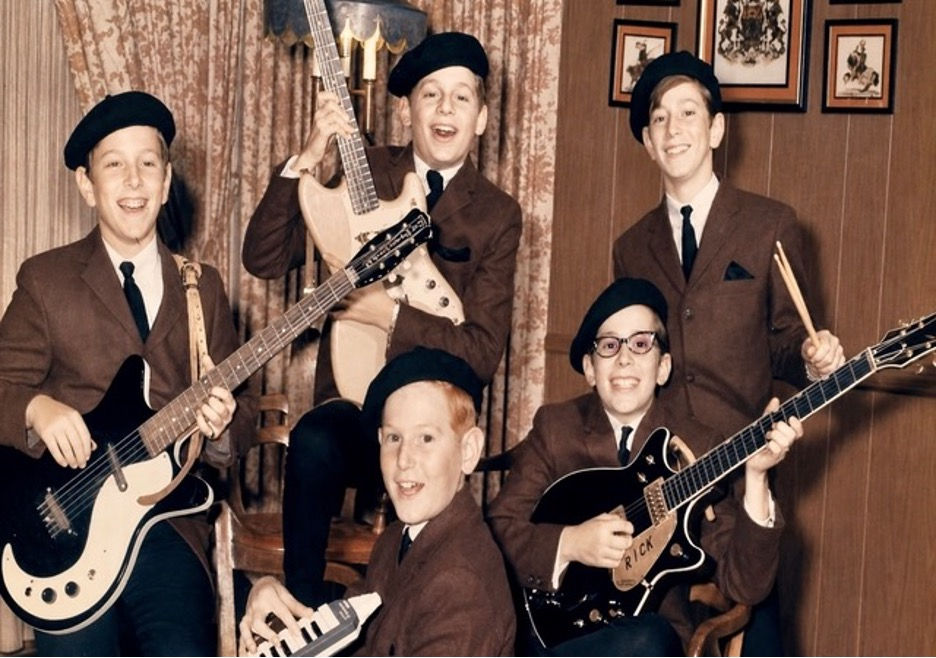
We gigged almost every weekend at places like: The Raleigh House, B’nai Moshe’s social hall, Shaarey Zedek’s social hall, Knollwood County Club and almost every synagogue in Oak Park, Huntington Woods and Southfield, Mich. during those years. Each of us got paid $5. This was serious money. The girls were crazy for us, or at least that is how I remember it, and at my age I reserve the right to improvise a little.
Don and I became best friends, with sleepovers, neighborhood wandering, and the usual low-level trouble boys get into when they are smart enough to be bored but not yet smart enough to be useful. I even met my first girlfriend, Karen Spiwak, near where he lived at the Stratford Villa Apartments in Oak Park.
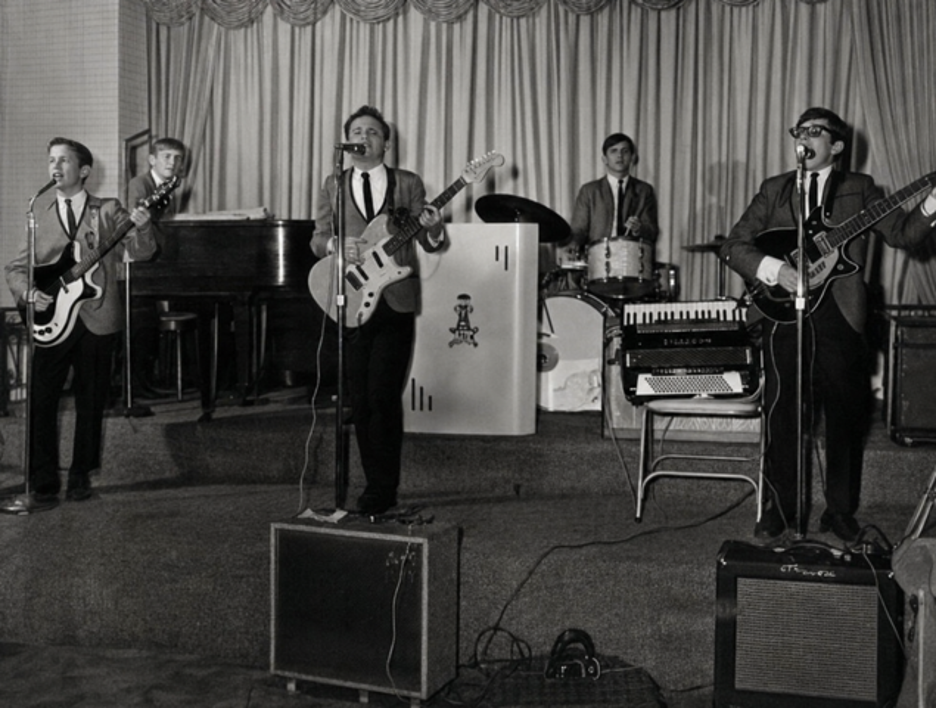
Eventually, Don, mostly Don, wanted to move in a new direction. We started another band, and once again I took responsibility for the name. This time I called it The Opalescent Hobnails, a phrase I found while reading one of my mother’s books on antiques. Did it sound like a psychedelic band name? Absolutely. Did we know what it meant? Absolutely not. In the 1960s, not knowing what something meant could actually be an advantage.

The truth is, all of us were motivated by the same sacred teenage principles: play music, meet girls, get invited to parties, and seem more mysterious than we actually were. Being in a band was a very effective strategy. It was certainly better than standing against the wall at a dance, trying to look relaxed while wearing a clip-on tie.
Years passed, and the two DF's from my childhood, Doug Fieger and Don Fagenson, found their own extraordinary voices.

Doug was the leader and main singer of The Knack, and in 1979 he co-wrote the song “My Sharona.” It caused a cultural detonation. The song reached No.1 on the Billboard Hot 100, stayed there for six weeks, and became Billboard’s top pop single of 1979. I had known Doug when he was a creative kid learning guitar. Years later, both of us were living in Los Angeles and we were very friendly from 1976 to the early Troubadour days. I got to witness the Knack become the hottest band in town.

At the Troubadour, everyone came to see the Knack, including Steven Stills, Bruce Springsteen and Ray Manzarek of The Doors. Many famous traveling musicians passing through Los Angeles seemed to turn up. Everyone wanted to see the hottest band in Los Angeles, and I watched the whole thing break open from the inside. I introduced Doug Fieger to the man who would become his manager, and I saw the teenage fans, the entourage, the excitement, and the madness that followed.
At the center of it all was Doug’s special relationship with Sharona Alperin. She was 17 years old in 1978 when Doug met her, and he was 25 when he wrote the song that would become one of the defining hits of the era, “My Sharona.” I traveled to see the band in San Francisco and Miami. It was fun, glamorous, ridiculous, and completely real.
Don Fagenson became Don Was, co-founder of Was (Not Was) with David Weiss, both classmates of mine from Oak Park, both talented creative partners. Don Was quickly became one of the most respected producers in America. He went on to win six Grammy Awards, including Album of the Year in 1990 for Bonnie Raitt’s Nick of Time and Producer of the Year in 1994. Don became president and chief creative officer of Blue Note Records, one of the great jazz labels in history, in 2012.
Last summer in San Francisco, I saw him perform with his new band, The Pan Detroit Ensemble, and during that weekend he received a lifetime achievement honor from SFJAZZ. We were able to spend some time together after the show and it reminded me of that wonderful history we shared and all the places he still frequents in the Motown where we all grew up.
Not bad for a kid who got into The Royal Jammers because he knew one more chord than I did.

Looking back, it all seems laughable and touching at the same time. Oak Park, Bar Mitzvahs, $5 gigs, melodicas, make-out parties, mothers driving boys with guitars, and the mysterious cultural power of Jewish suburban adolescence. We were not trying to change the world. We were trying to get through the weekend, get paid, play loud enough to be noticed, and maybe catch the eye of a girl across the room.
But there was something real inside all of that youthful noise. The boys I played with all went on, in one way or another, to find success in their own lives and in their own chosen directions. Some became famous, some became accomplished in ways far from the stage, but I think that all of us carried something from that Oak Park world, a certain confidence, humor, drive, and belief that you could make something happen if you just stepped forward and played your part.
Sometimes history starts that way. Sometimes it starts with a fifth-grade teacher, a garage, a few chords, a Bar Mitzvah circuit, and a bunch of boys who think they are already famous.
And for a little while, at least in Oak Park, we were.


Rick Fishman of the Martini Brothers Swing Band and a former Royal Jammer, grew up in Oak Park, Mich. He has owned his own retail businesses for close to 50 years. After moving to California in 1976, he founded the LeSportsac franchise in 1978, Traveling Light Stores, and As Time Goes By collectibles stores. For more than 25 years, he has operated ArtDecoCollection.com, now supported by a 7000 square foot brick and mortar showroom by appointment, while currently producing the digital book, Art Deco Resource Guide. https://artdecocollection.com/art-deco-resource-guide/
Great story full off OP memories and innocent years growing up in a great little town where Bar Mitzvahs were the center of our social lives.
Ricky, thank you for sharing your 1960s Oak Park Rock Band Memories. What a Great Read to start an early, lazy Sunday Morning. If you recall, my Brothers and I grew up on Condon, just South of Dartmouth, a few Blocks from your Family Home. I didn’t realize our respective L.A. Stints overlapped. I worked @ K-West Radio (Sister Station to WABX) while attending Law School in L.A. during the mid ‘70s and was a regular @ The Troubadour during those Years.
I enjoyed reading this extremely well written story and smiled through every word and photo.
Janice Green Stoneman
Beautifully written. Only one correction. Don Fagenson went to Dewey Elementary School not Einstein.
Such a great story!! Proud to have been from Oak Park, been your friend and enjoyed the Royal Jammers ❤️