Insider Critic Laurence Lerman's Oscar Picks


The 98th Academy Awards will be held at Los Angeles’s Dolby Theatre on Sunday, March 15, at 8:00 pm ET and broadcast live around the world on ABC.
Yes, it’s that time, again.
After a season shaped by shifting release strategies, evolving audience habits, and a remarkably wide range of critical enthusiasms, this year’s Oscars arrive with a sense of cautious confidence. The nominees reflect a blend of prestige filmmaking and broader marketplace appeal, while the ceremony itself carries the quiet pressure of maintaining the momentum the show has rebuilt in recent years — balancing reverence for the art form with the Academy’s ongoing effort to remain culturally relevant. Add to that reverence and relevance the fact that the season comes upon us at the same time as a new war, one that will surely be met with scrutiny and anger over the course of the evening.
For the second consecutive year, Conan O’Brien will steer the evening as host, a choice that now feels less like an inspired gamble than sound institutional judgment. The Academy invited him back because last year’s results spoke clearly: the 97th Oscars drew nearly 19.7 million viewers, the Academy’s largest audience since 2020, reinvigorating a telecast that had been met with genuine anticipation, but then quietly receded. O’Brien greeted the return engagement booking with his trademark mix of self-deprecation and show-business savvy, joking that “the only reason I’m hosting the Oscars next year is that I want to hear [Best Actor winner] Adrien Brody finish his speech.” It neatly captures what worked — a host who respects the pageantry but knows when to puncture it just enough to keep the evening moving.
This year’s ceremony isn’t merely another page in Oscar history; it’s a notable chapter. Leading the pack is the Southern Gothic horror-drama Sinners, Ryan Coogler’s supernational Jim Crow era thriller that serves as a vital, allegorical exploration of Black survival and culture. It rewrote the record books with 16 nominations, the most ever received by a single title. The feat eclipsed the legendary runs of All About Eve, Titanic, and La La Land (each of which received 14 noms), prompting conversation not only about the film’s breadth of acclaim but also about how Academy tastes continue to evolve.
This year also marks the introduction of a new competitive category, Best Casting, bringing the total number of Oscar categories to 24. Long advocated by industry insiders, the addition formally recognizes an art that has always operated in plain sight — the chemistry, instinct, and intuition behind assembling ensembles that feel fully alive on screen.
Taken together, these elements point toward a ceremony intent on refinement rather than reinvention. Last year’s show, held in the wake of the deadly and destructive Los Angeles wildfires in January, demonstrated that the Oscars could still command attention without courting spectacle for its own sake, and expectations are that the 98th will build on that steadier foundation (minus any tragedies, hopefully).
So here we are, with a record-breaking slate of nominees, a proven host returning to the stage, and an industry still negotiating how it wants to present itself to the world. What follows are my predictions for the six biggest awards, which are shaped by artistry, strategy, and the narratives that have gelled over the course of the season. Call it less a forecast than a snapshot of where the conversation stands just before the envelopes are opened.

Best Picture:
Bugonia
F1
Frankenstein
Hamnet
Marty Supreme
One Battle After Another
The Secret Agent
Sinners
Sentimental Value
Train Dreams
Who would I like to win: One Battle After Another
Who will win: One Battle After Another
Since the Best Picture race often comes down to which film feels most complete, One Battle After Another has an undeniable advantage. Paul Thomas Anderson’s satirical adventure-thriller doesn’t merely excel in one area—it has it all. The screenplay is muscular and assured, the production values and cinematography (it was primarily shot in the high-resolution, 35mm VistaVision format), and the performances—both individual turns and the ensemble as a whole—are uniformly outstanding.
Inspired in part by Thomas Pynchon’s 1990 novel Vineland, the film draws on that author’s familiar terrain: a world shaped by conspiracy, chaos, and the uneasy comedy of paranoia. Writer/director Anderson smartly absorbs those elements into his own register, capturing the novel’s absurdist humor and off-kilter unease without ever letting style overwhelm substance. The result is a film that feels intellectually alive with ideas yet deeply grounded.
Crucially, it speaks to America now, a land caught in a continuous and exhausting cycle of struggle. Anderson’s long-standing preoccupations—power, belief, masculinity, national myth—are sharpened into something urgent without ever tipping into didacticism.
The most realistic contender is Coogler’s Sinners which is undeniably confident, propulsive, and deeply felt—and Coogler’s future remains blindingly bright. But this feels like Anderson’s hour not as a career prize for 30 years of fine work, but as recognition for a single film of undeniable authority.

Directing:
Chloé Zhao, Hamnet
Josh Safdie, Marty Supreme
Paul Thomas Anderson, One Battle After Another
Joachim Trier, Sentimental Value
Ryan Coogler, Sinners
Who would I like to win: Paul Thomas Anderson
Who will win: Paul Thomas Anderson
Paul Thomas Anderson has been refining his voice for decades, from the restless propulsion of Boogie Nights to the operatic force of There Will Be Blood to the controlled intensity of The Master. One Battle After Another feels like the culmination of that long evolution: a film made by a director who knows exactly how much to show, when to withhold, and how to let performances breathe within a rigorous formal design.
The film’s shifting tones—paranoia, absurd humor, genuine emotional unease—are handled with extraordinary assurance. Anderson draws on Pynchonian bedlam without letting it spill into messiness, shaping complexity into something legible and resonant.
In a competitive year, Anderson's work stands apart not for its volume or ambition, but for its authority. This is the rare case where the directing prize feels less like a surprise and more like an inevitability.

Actor in a Leading Role:
Timothée Chalamet, Marty Supreme
Leonardo DiCaprio, One Battle After Another
Ethan Hawke, Blue Moon
Michael B. Jordan, Sinners
Wagner Maura, The Secret Agent
Who would I like to win: Ethan Hawke
Who will win: Timothée Chalamet
The Best Actor award has traditionally been one of the Academy’s most age-conscious categories, a place where long résumés and accumulated gravitas tend to carry real momentum. That’s what makes Timothée Chalamet’s position this year so striking. At 30, a victory would make him the second-youngest Best Actor winner in Oscar history.
And yet Marty Supreme makes a persuasive case for setting precedent aside.
What distinguishes Chalamet’s performance as a fast-talking 1950s New York City table tennis prodigy and hustler is not flash or youthful intensity, but control. He shapes the character with restraint and specificity, allowing volatility and self-destruction to surface organically rather than announcing them. For all of Marty’s manic energy, Chalamet serves it up via an assured, thoughtful process.
The competition is formidable. First there’s Michael B. Jordan, who delivers a bravura dual performance in Sinners, portraying twin brothers with sharply defined physical and emotional distinctions. Meanwhile, prolific four-decades-long performer Ethan Hawke is quietly devastating as lyricist Lorenz Hart in Blue Moon, capturing Hart’s brilliance and despair on the night his former partner Richard Rodgers celebrates the triumph of his new, soon-to-be-legendary musical Oklahoma!
But it’s Chalamet, a relatively new A-lister (his immersive portrayal of Bob Dylan in last year's A Complete Unknown garnered a Best Actor nom) who's been successfully alternating between large-scale Hollywood fare and smaller independent features for the past decade, feels like the one who will make the Academy go a different way this year.

Actress in a Leading Role:
Jessie Buckley, Hamnet
Rose Byrne, If I Had Legs I’d Kick You
Kate Hudson, Song Sung Blue
Renate Reinsve, Sentimental Value
Emma Stone, Bugonia
Who would I like to win: Jessie Buckley
Who will win: Jessie Buckley
The category of Best Actress often rewards transformation, but it also rewards the harder trick: anchoring a film so completely that all its edges feel purposeful. Think Frances McDormand in 2020’s Nomadland (also directed by Chloé Zhao)—less a performance than a presence, a quiet force that gives an episodic journey its emotional spine. Jessie Buckley does something similar in Hamnet, which imagines the life and death of William Shakespeare's young son while delivering a portrait of grief that’s restrained, unshowy, frequently very quiet, and devastating in the way it accumulates. She doesn’t push the big emotional moments–she lets them arrive on their own. And when they do, they land with real force. It’s rigor and growing intensity that looks effortless.
Buckley’s case is strengthened by a decade of superb work that includes 2020’s Wild Rose, 2021’s The Lost Daughter, and 2023’s Wicked Little Letters. And her performances are often what one walks away from a film remembering—think 2020’s I’m Thinking of Ending Things and Fingernails from 2023. (Yeah, I don’t remember them that well, either.) With Hamnet, though, the perfect canvas has been provided for the lady and her talents.
Just as with Best Actor, the nominee field is strong. Norwegian actress Renate Reinsve brings confidence and precision to the drama Sentimental Value; Emma Stone tackles the dark, sci-fi comedy-thriller Bugonia with fearless tonal agility; and Rose Byrne is raw and unguarded in the similarly tense psychological drama-comedy If I Had Legs I’d Kick You. Still, this feels like Buckley’s year: a powerful and wholly engaging performance that provides recognition for a consistently excellent output.

Actor in a Supporting Role:
Benicio Del Toro, One Battle After Another
Jacob Elordi, Frankenstein
Delroy Lindo, Sinners
Sean Penn, One Battle After Another
Stellan Skarsgård, Sentimental Value
Who would I like to win: Sean Penn
Who will win: Stellan Skarsgård
Stellan Skarsgård feels like the kind of Supporting Actor winner the Academy likes to congratulate itself for recognizing. For more than four decades, the Swedish superstar has been a fixture of international and stateside cinema, moving easily between leading and supporting roles, and Sentimental Value gives him a showcase that’s both generous and precise. His performance as a fading filmmaker attempting to engineer both a late-career comeback and a fresh connection with his estranged daughters is quietly authoritative, layered with regret, restraint, and lived-in intelligence—work that deepens the film without demanding attention. A win here would also serve as a nod to Sentimental Value’s remarkable showing at the Awards, with nine nominations and a strong position in the Best International Feature race.
But I have to say that Sean Penn would make for a thrilling upset. His Colonel Steven J. Lockjaw in One Battle After Another is a nightmarish creation—an authoritarian zealot driven by paranoia, guilt, and a grotesquely distorted sense of affection. It’s an unrelenting, deeply unsettling performance, and one of the film’s most daring elements, even if the film’s success in other major categories hinder Penn’s chances here. Ditto for his co-star Benicio del Toro. Then there's Jacob Elordi, whose fresh take on a classic horror figure in Frankenstein works best as a high-profile boost to a rising career, while Delroy Lindo’s nod for Sinners feels more like a courtesy than a coronation.
So, this feels like Skarsgård’s moment—an elegant, quietly commanding performance that hits the Academy in its sweet spot.
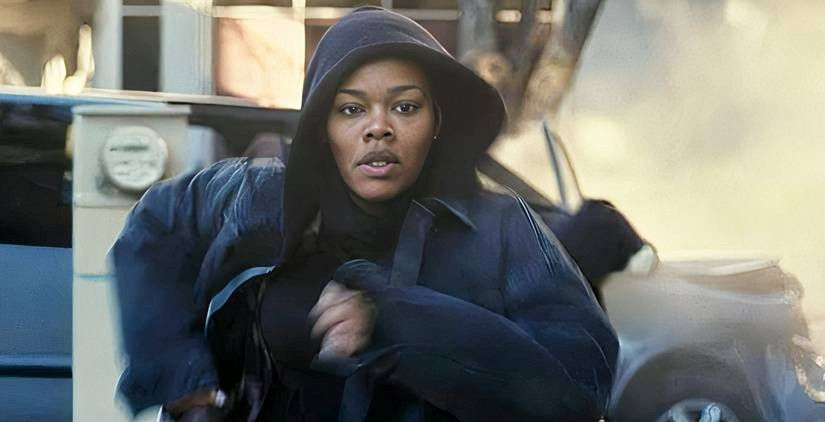
Actress in a Supporting Role:
Elle Fanning, Sentimental Value
Inga Ibsdotter Lilleaas, Sentimental Value
Amy Madigan, Weapons
Wunmi Mosaku, Sinners
Teyana Taylor, One Battle After Another
Who would I like to win: Amy Madigan
Who will win: Teyana Taylor
Few nominees arrive this season with the kind of heat Teyana Taylor has right now. Over the past six months, she’s been unavoidable—talk shows, red carpets, magazine covers, headlines, and award stages—and already honored with a Golden Globe win for One Battle After Another. More than momentum, though, it’s her turn as the complex far-left revolutionary Perfidia Beverly Hills that provides the fireworks and endures.
Taylor brings force and specificity to the volatile, sexually charged role, embracing the character’s contradictions rather than smoothing them over. It plays as a breakout performance rooted in risk and command, not reassurance.
As for the notably outstanding fellow nominees, Sentimental Value places two sharply drawn performances in contention. Elle Fanning initially plays on surface polish before revealing unexpected emotional depth, while Inga Ibsdotter Lilleaas sneaks up with a quiet, piercing presence. Each adds a distinct emotional register to the film. Meanwhile, Wunmi Mosaku brings steadiness and moral gravity to her role as a Hoodoo healer in Sinners.
Then there’s Amy Madigan, who would make a deeply satisfying winner. Her gleefully unhinged Aunt Gladys in Weapons is fearless and funny, a master class in controlled chaos (earlier on, at least)—and a reminder of the skill and range she’s brought to her film and television work for decades. Still, awards seasons tend to crown moments as much as performances, and this moment feels like it belongs to Harlem’s own Teyana Taylor.
Roughly 300 films are eligible for Academy Awards each year, and for every movie that lands a nomination, there are at least two others that plausibly could have as well. The Best Picture lineup alone reflects just how crowded the year was. Jon M. Chu’s Wicked: For Good, Noah Baumbach’s Jay Kelly, and James Cameron’s Avatar: Fire and Ash—all very popular and well-received pictures—were shut out of the category entirely despite high expectations. It’s a similar case with respected lower-profile works like Park Chan-wook’s No Other Choice, and Mona Fastvold’s The Testament of Ann Lee that also found themselves outside the final slate.
That’s not a failure—it’s a sign of health. A crowded year means more voices and choices, more risks, and more room for emerging filmmakers and seasoned veterans alike to do what they do best and maybe even stretch the form.
So, there you go--our picks, our arguments, and at least a few opinions you may already be preparing to dismantle!
Now we want to hear from you. Tell us where you agree, where you think we’ve gone completely off the rails, and which films or performances you’d have pushed across the finish line instead. Scroll down, leave a comment and join the fray. After all, half the fun of awards season isn’t the trophies—it’s the arguing. Movies are meant to spark opinions, inspire the defense of favorites, and occasionally start a friendly brawl or two. So, make your case and keep the conversation going!

Laurence Lerman is a film journalist and a former editor of Video Business--Variety's digital media trade publication. Over the course of his four-decade career, he has conducted one-on-one interviews with just about every major filmmaker working today, from Martin Scorsese, Quentin Tarantino and Clint Eastwood to Kathryn Bigelow, Bernardo Bertolucci, and Werner Herzog. Most recently, he is the co-founder and editor-in-chief of the online review site DiscDish.com, the founder and curator of FilmShul.com, a multi-part presentation on the history of Hollywood and Jewish America, and a commentator on various 4K UHD and Blu-ray home entertainment releases.
I agree with justcow, Sinners will win best picture and Anderson, best director. Michael B. Jordan will win best actor (would have liked to see Edgerton for Train Dreams in this category). Of the three leading actress roles I’ve seen, I thought Renate Reinsve was the best. Teyana for BSActress and Delroy or Skellan S for BSActor. Really tough choices this year!
I didn't like, "One Battle After Another" at all, but I thought it was locked in for all the major wins. However, I have noticed that Oscar doesn't like to mimic BAFTA, so that might give "Sinners" a chance to win. I actually liked Sinners very much. The real underrated movie this year was "Companion," which can be difficult to describe without giving away the plot. But I haven't met anyone who has seen it who didn't love it.
I think thanks to Timmy;s callousness and idiotic remarks he will lose to Jordan in the Best Actor category. I think he had it sealed until recently. The supporting awards are anyone's guess although Madigan seems to be a sentimental favorite for an unsentimental perfromance.
Too much to respond to here, but my guess is Sinners will take Best Picture and Anderson will get his much-sought-after Best Director. I enjoyed One Battle... (probably the bets PTA movie I've seen) but it had some big flaws in the writing (as do all his films) that make it hard for me to root for. In that vein of picture, I prefer Marty Supreme- but if we're talking about what deserves to win, from that batch of 10, Hamnet is probably the of the batch. Which surprised me! I had little desire to see it, but it's actually doing something interesting and innovative in its storytelling, unlike all the 70's retro throwback films in that batch (even though…
I only saw Sinners and aside from Michael B Jordan's portrayal of the twins I didn't like it. I hope he gets best actor. Too much going on, TOO MUCH to try to figure out. I don't mind a movie making me think afterwards but I shouldn't have to figure out what was going on and why.